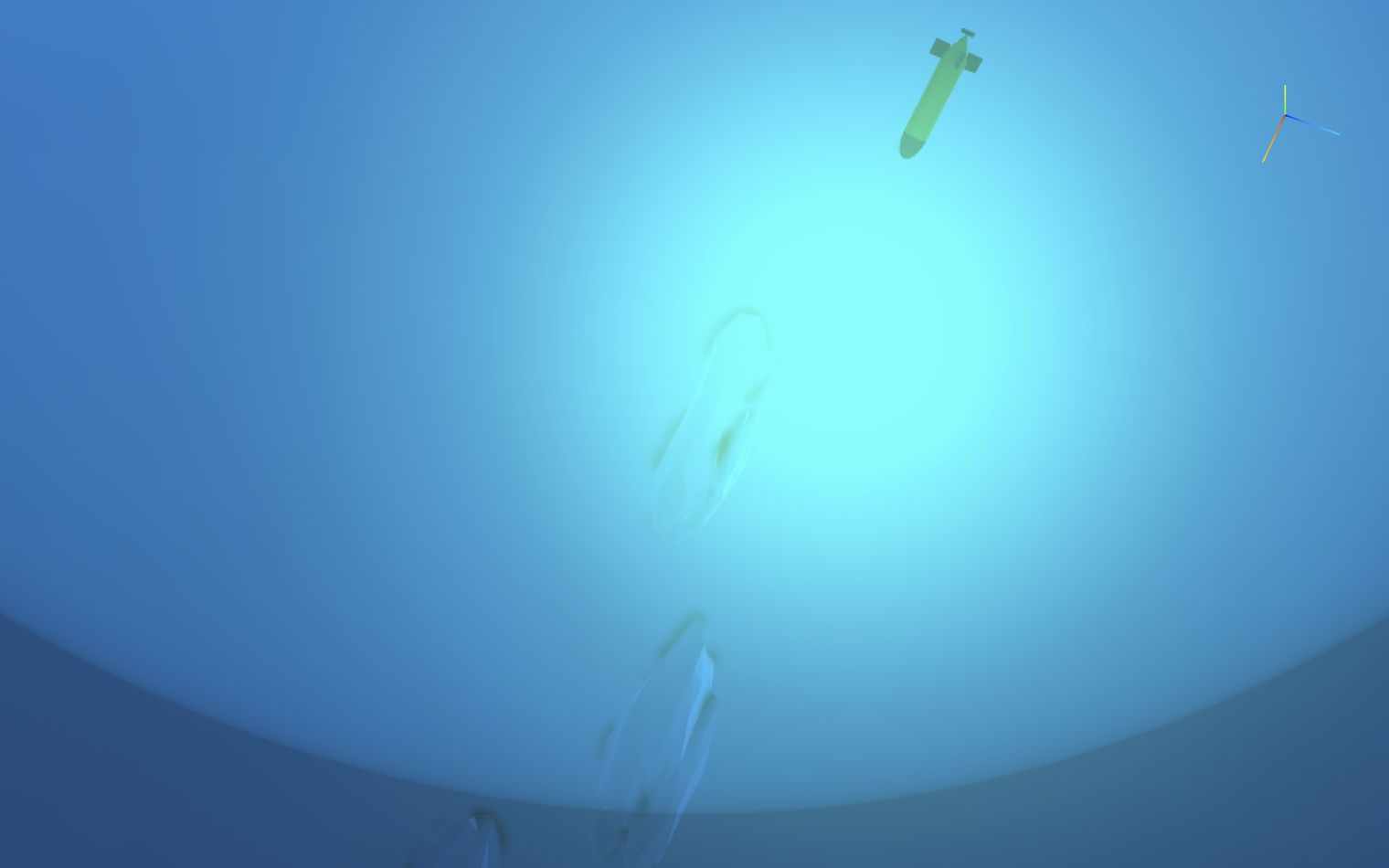
AZAREL
An autonomous vehicle sent beneath an ice shelf is doing something no other marine robot does: operating in an environment where the surface is not an escape route. In open water, almost every serious fault has the same fallback — drop weights, come up, get found. Under ice, coming up means hitting the underside of the ice, and being found means being found by a vehicle that would have to go under the ice to do it.
The science is worth the risk. Measurements of basal melt at the underside of an ice shelf are among the more important inputs to sea level projection, and there is no way to take them from a ship. The same applies to sea ice draft, under-ice biology, and the cavity geometry that determines how warm water reaches the grounding line.
One shot, and no rehearsal
These missions are rare and expensive. A polar campaign has a multi-year lead time, a short season, a ship, and usually one vehicle. If the mission fails, the answer is not to try again next week.
That inverts the usual development economics of marine robotics. Ordinarily you iterate in a test tank, then a harbour, then open water, stretching conditions gradually. Under ice there is no intermediate rung. The gap between the harbour and the real thing is the entire problem, and it has to be crossed in one step, in a place where failure is terminal.
The specific difficulties
The ceiling
Ice is the one environment where the vehicle plans against two surfaces. The underside of a shelf or floe is not flat — it has keels, channels and terraces — and a vehicle that only plans against the seabed will eventually try to occupy the same space as it. In Leviathan the ice ceiling is queried the same way the seabed is, which is the minimum a simulator has to do to represent this honestly.
Navigation with no fixes
No GNSS, and often no acoustic positioning either, because the surface transponders would have to be deployed through ice. Navigation falls to inertial measurement and DVL bottom lock, with error growing the whole time. Many vehicles can lock to the ice above instead of the seabed below, which changes the velocity reference and therefore the error behaviour.
Communications blackout
Whatever the vehicle decides, it decides alone. An operator cannot intervene, which means every behaviour has to be one you were willing to let run unsupervised for hours.
Cold
Battery capacity drops, seals stiffen, and the energy margin that looked comfortable in temperate water is smaller than the spreadsheet said.
What simulated practice is actually for here
Not to prove the mission will succeed. Simulation cannot prove that and should not be sold as if it could. What it can do is make sure the failure modes you meet are ones you have already seen.
- Run the transit a few thousand times with different ice geometry and see what fraction of those runs ends in contact with the ceiling.
- Degrade the DVL mid-mission and watch what the navigation does over the next two hours, rather than the next two minutes.
- Find the point in the mission where the energy margin actually goes negative, under a distribution of currents rather than the nominal one.
- Establish, on a scored task with per-seed results, whether a change to the planner made the vehicle safer or just made one run look better.
Why this matters to marine robotics generally
Under-ice work is where the field’s usual habits break down most visibly. The ordinary approach — build it, put it in the water, see what happens, fix it — assumes you get the vehicle back. When that assumption fails, everything has to be established before the vehicle leaves: the autonomy, the failure handling, the energy budget, the navigation error growth.
That discipline is good for the rest of marine robotics too. Most teams do not have it because they do not have to. Polar teams have to, which is why some of the most careful autonomy engineering in the field comes out of a corner of it with almost no commercial market.