 AZAREL
Notes from the build.
Hydrodynamics, sonar, synthetic data and the awkward business of proving a marine robot works before it gets wet. Written while building Leviathan.
What underwater robots can do after a flood like Nepal’s, and what they cannot
On 26 August a glacier collapse in Langtang sent a debris flow nearly 100 km down the Lende Khola and the Trishuli. No robot was going to help on that morning. In the weeks afterwards — flooded powerhouse tunnels, impounded water behind debris dams, bridge piers nobody can see — the picture is different, and worth being precise about.
 Leviathan
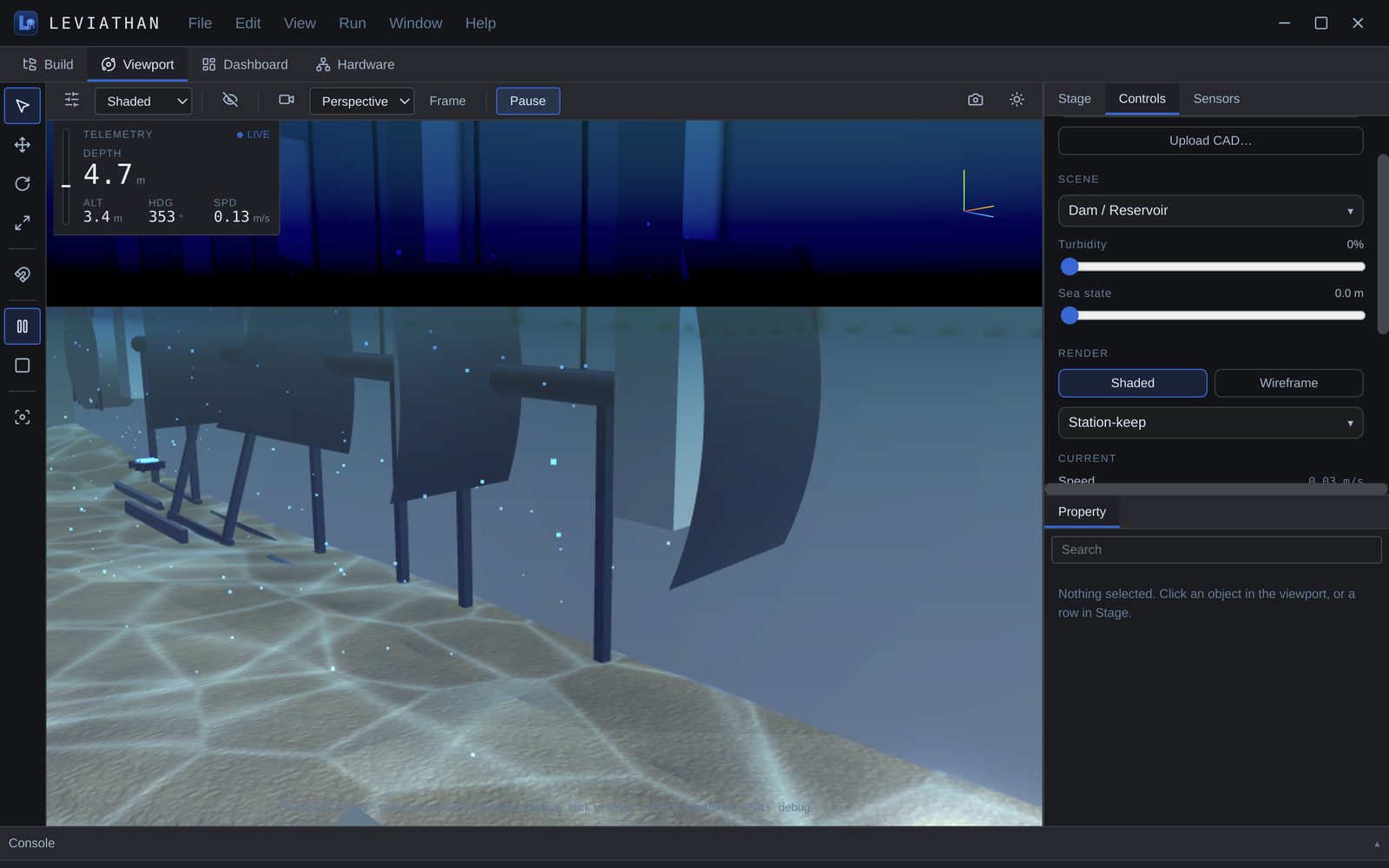
You cannot rehearse a flood, so you have to simulate one
Flood-response water is the worst case for an underwater vehicle: no visibility, no map, live current, and debris where the seabed should be. That is exactly the water a team cannot practise in beforehand.
Where this actually gets used
Five jobs, five hard problems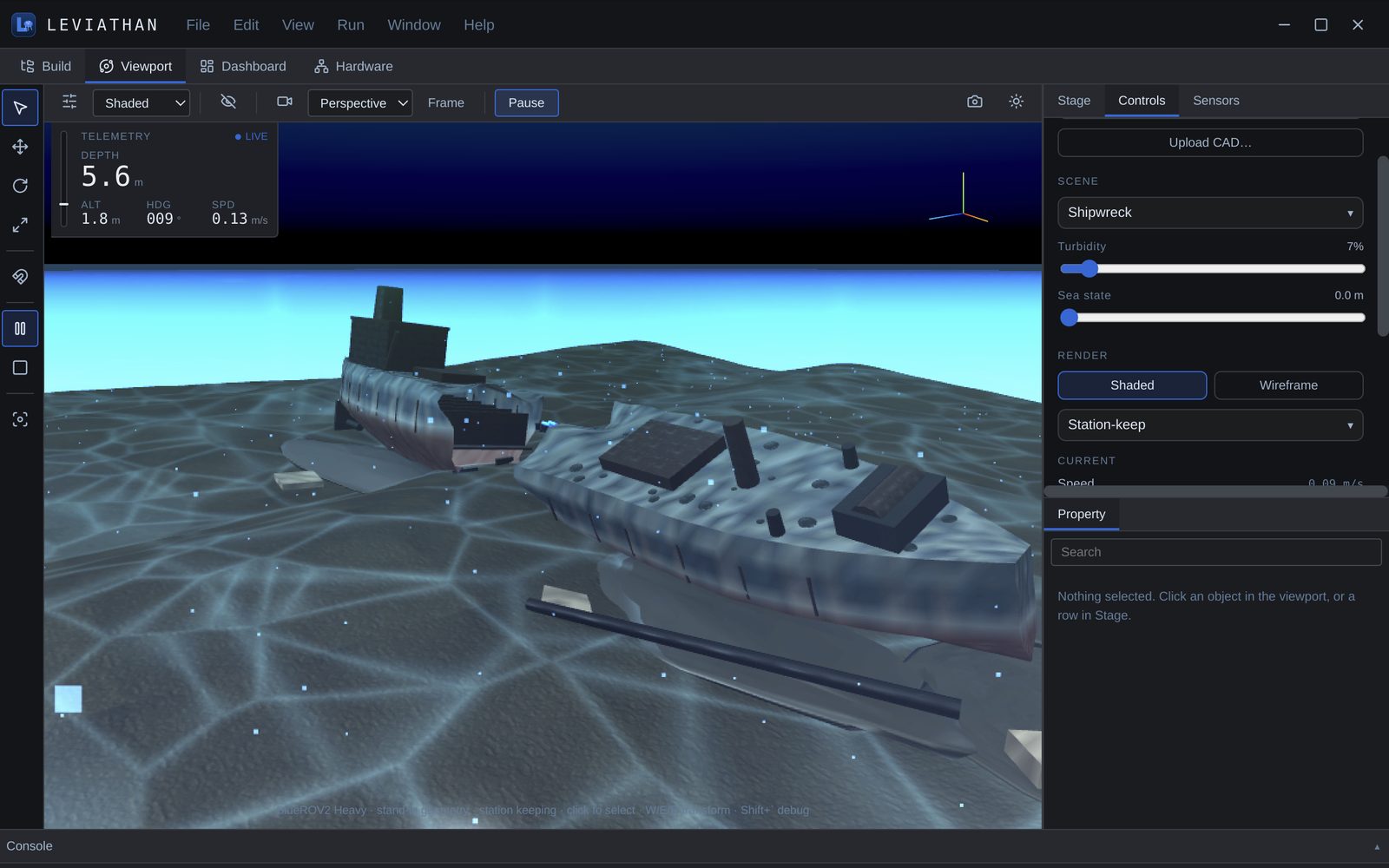 Shipping
Cleaning a hull nobody can see
Light slime can cost 20 per cent in fuel and heavy growth far more. The cleaning is the easy half; covering a featureless steel surface you cannot see is the robotics problem.
 Energy
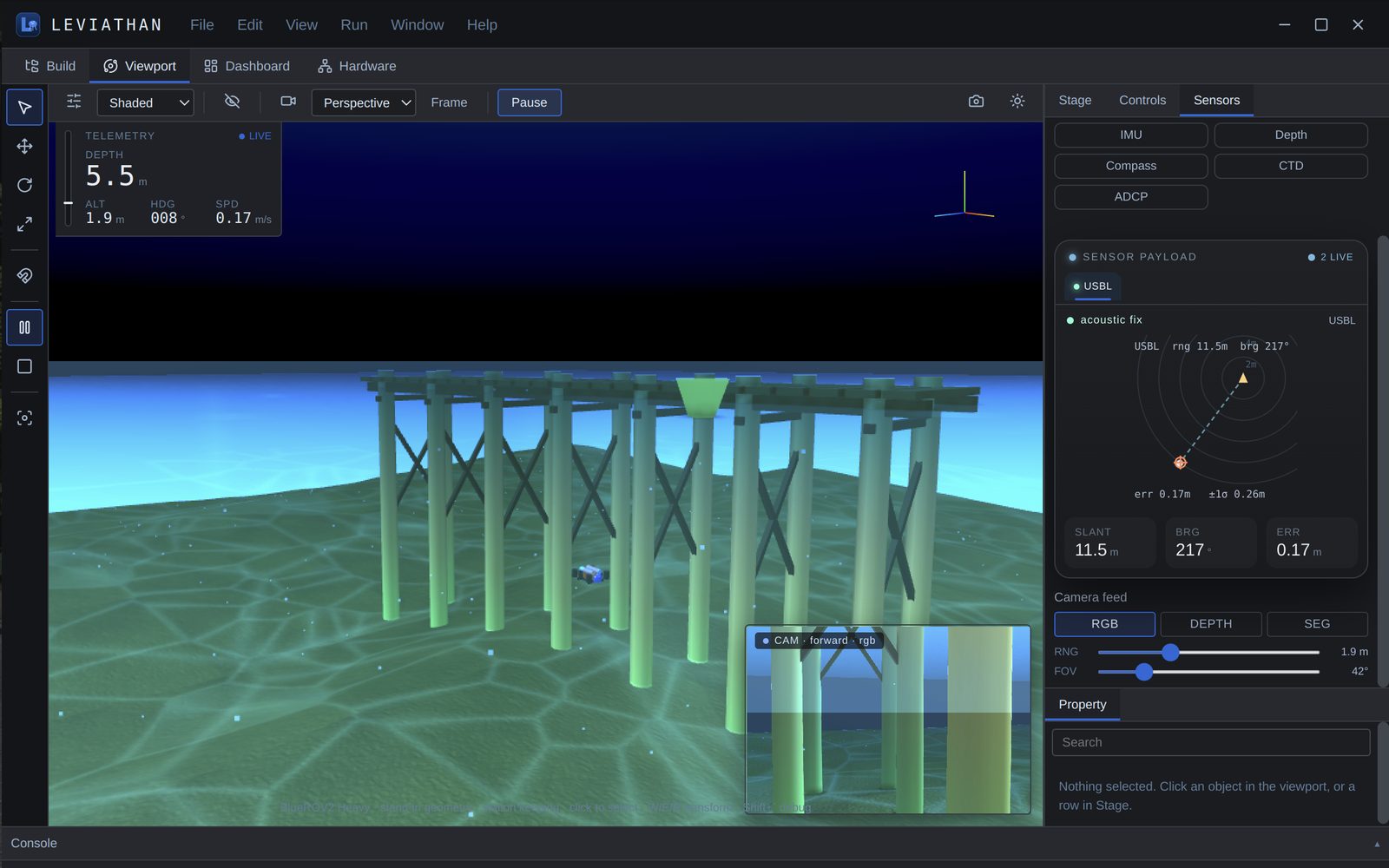
Scour is invisible from the deck
A foundation can look perfect from a crew transfer vessel while the seabed around it disappears. Inspection demand is outgrowing the pool of people who can fly the vehicle.
 Defence
Looking for one thing in a hundred square kilometres
Mine countermeasures and munitions survey are search problems with a brutal prior. The bottleneck is not the sonar — it is that nobody can give you enough labelled examples.
 Infrastructure
Following a pipe in the dark
Hundreds of thousands of kilometres of pipe and cable, inspected on a schedule. The most repetitive job in subsea, and the best-shaped task in the field for a real benchmark.
 Science
Under ice, surfacing is not an option
One vehicle, one season, no recovery if it goes wrong. Nowhere in marine robotics is practice more valuable, or more impossible to get.
New posts, when there are new posts.
No schedule and no newsletter cadence. If you work in marine robotics and want to argue with any of this, we would rather have the argument.